How to File a Water Damage Insurance Claim in Lebanon
If your floor is wet right now and you are reading this at midnight, you need two things working in parallel: a restoration crew on the way and an insurance claim opened before the sun comes up. In Lebanon, most homeowners policies require you to mitigate damage immediately, which means waiting until morning to call your carrier can actually reduce your payout. The faster you document, notify, and start drying, the cleaner your claim looks to the adjuster.
At Lebanon Water Restoration, we have walked hundreds of Lebanon homeowners through this exact process since 2018. We are IICRC certified, BBB A+ rated, and we bill insurance directly on most jobs. If we cannot help with your specific loss, we will tell you directly and point you somewhere that can. This guide breaks down the full claim process: what to photograph, what language to use on the phone, what your policy probably covers, and what adjusters look for before they write a check. Use the tables and checklists below as a working reference, not background reading. Print it, screenshot it, or hand it to a family member who can call the carrier while you start moving belongings to dry ground.
Quick Answer: Filing a Water Damage Claim in 6 Steps
Here is the short version for Lebanon homeowners in active emergency mode:
- Stop the water source (shut off main valve, breaker, or appliance line)
- Photograph and video everything before you move a single item
- Call your insurance carrier's 24 7 claims line and get a claim number
- Call a licensed restoration company to begin mitigation within 24 hours
- Save every receipt, invoice, and communication in one folder
- Meet the adjuster on site with your documentation and a moisture map
Skip any of these and your payout shrinks. Mitigation delay is the single most common reason Lebanon claims get reduced or denied.
Step 4: Hire Restoration Within 24 Hours
Your policy contains a duty to mitigate clause. Translation: you must take reasonable steps to prevent further damage, or the carrier can deny the portion that worsened. Mold begins forming in 24 to 48 hours on wet drywall and carpet pad, and adjusters know this.
A qualified restoration crew will:
- Extract standing water with truck mounted units
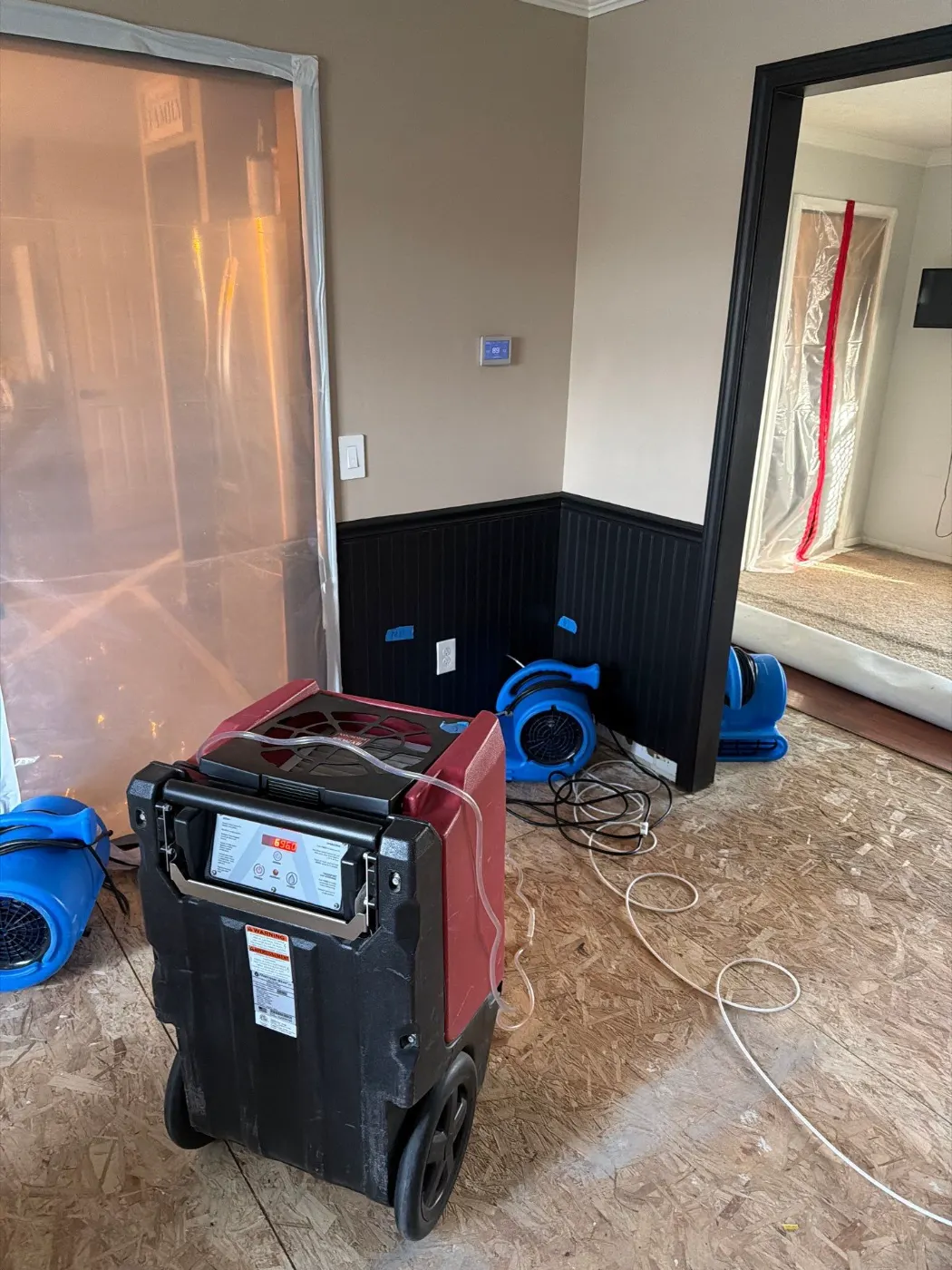
- Set air movers and dehumidifiers per IICRC S500 standards
- Produce a moisture map showing readings before, during, and after drying
- Provide an itemized estimate in Xactimate (the software adjusters use)
- Communicate directly with your adjuster to avoid scope disputes
Ask for proof of IICRC certification, current liability insurance, and a written scope before any equipment is unloaded. Lebanon Water Restoration provides all three at the first site visit so there are no surprises when the adjuster reviews the file.
Step 5: Meet the Adjuster Prepared
The adjuster visit usually happens 2 to 7 days after you file. Bring:
- Printed photo log with timestamps
- Receipts for emergency purchases (fans, tarps, hotel)
- Restoration company estimate and moisture readings
- List of damaged contents with replacement values
- Any plumber invoices or repair documentation
Walk the adjuster through the loss in the same order it happened. Point out hidden areas like the cavity behind kick plates, the underside of subfloor, and insulation in exterior walls. If your restoration project manager can be present, even better. A two against one scope conversation is far less likely to result in a lowballed estimate.
Step 3: Understand What Your Policy Actually Pays
Most Lebanon policies break payouts into three buckets. Knowing which applies keeps the adjuster honest.
| Coverage Type | What It Pays For | Typical Limit |
|---|---|---|
| Dwelling (Coverage A) | Structure, drywall, flooring, cabinets | Policy face value |
| Personal Property (Coverage C) | Furniture, electronics, clothing, contents | 50-70% of dwelling |
| Loss of Use (Coverage D) | Hotel, meals, laundry if home is unlivable | 20-30% of dwelling |
| Ordinance or Law | Code upgrades during repair | 10% of dwelling (varies) |
Deductibles in Lebanon typically run $1,000 to $2,500. If your loss is under deductible plus a few hundred dollars, filing may not be worth the rate impact. Our team can give you a free estimate before you commit. Also check whether your policy is replacement cost value (RCV) or actual cash value (ACV). ACV policies subtract depreciation and rarely cover the full rebuild, while RCV releases the held back depreciation once repairs are complete and invoiced.
Common Mistakes That Shrink Your Payout
Even prepared homeowners lose money on avoidable errors. Watch for these:
- Throwing away damaged materials before the adjuster sees them (keep a sample of carpet, pad, and baseboard in the garage)
- Accepting the first estimate without reviewing line item pricing against your area's Xactimate values
- Cashing a payment marked "final" when supplements are still pending
- Signing a broad assignment of benefits without reading the cancellation terms
- Forgetting to claim laundry, dry cleaning, and pet boarding under Loss of Use
If a dispute stalls progress, request a written reservation of rights letter and consider hiring a licensed public adjuster. Lebanon Water Restoration can refer reputable advocates in Lebanon when a claim goes sideways.
Step 1: Document Before You Touch Anything
Adjusters trust evidence, not stories. Before you grab a towel or move a couch, walk the affected area with your phone and capture:
- Wide shots of every wet room from each corner
- Close ups of standing water depth against a baseboard or ruler
- The source (burst pipe, overflowing toilet, ceiling stain, sump pump)
- Serial numbers and model tags on damaged appliances
- Contents inside cabinets, closets, and drawers that got wet
- Timestamped video walkthrough narrating what you see
If the cause is a hidden leak, our guide on water damage behind walls and hidden leak detection shows the thermal and moisture meter evidence adjusters expect. Keep originals on your phone and back them up to cloud storage the same day. Adjusters sometimes request raw image files with metadata to verify the date and location, and a deleted photo cannot be recovered weeks later when a supplement comes up.
Step 6: Track the Payout and Supplements
Initial checks are rarely the final number. As demolition reveals hidden damage (warped subfloor, saturated insulation, compromised framing) your restoration company files supplements. Expect the timeline below.
| Stage | Typical Timeline | What Happens |
|---|---|---|
| Claim filed | Day 0 | Claim number issued |
| Adjuster inspection | Day 2-7 | on site walk and scope |
| Initial estimate | Day 7-14 | First check (minus depreciation) |
| Mitigation complete | Day 5-10 | Drying finished, invoice sent |
| Reconstruction | Week 3-8 | Rebuild begins |
| Final payment | After completion | Depreciation released |
Step 2: Call Your Carrier With the Right Language
What you say in the first call shapes how the claim gets coded. Use specific terms:
- "Sudden and accidental discharge" (covered on most policies)
- "Internal plumbing failure" (not flood, which needs separate flood insurance)
- Date and approximate time of discovery
- Category of water if you know it (clean, grey, or black)
Avoid words like "slow leak," "gradual," or "been happening for a while." Those phrases trigger gradual damage exclusions. If you are unsure whether your loss qualifies, review what homeowners insurance covers for water damage before you dial. Write down the claim number, the representative's name, and the direct callback line. If the carrier offers a preferred vendor, you are not obligated to use them. You have the right to choose your own licensed restoration contractor in Lebanon, and Lebanon Water Restoration works with every major carrier.
When the Stakes Are This High, Pick the Right Partner
Every claim story above turned out the way it did because the homeowner moved fast and brought in documentation the insurer respected. Lebanon Water Restoration has handled water damage claims across Lebanon since 2018, and our IICRC certified crews produce the kind of moisture logs, thermal images, and category determinations that close files instead of fighting them. If your home is wet right now, call us. If you are not sure whether your situation is even a claim, call us anyway. We will tell you straight whether to file or to handle it differently, and we will not pad a scope to chase your deductible.
Frequently Asked Questions
How quickly do I need to file a water damage claim in Lebanon?
Most carriers want notification within 24 to 72 hours of the loss. Waiting longer can trigger a denial for late reporting. Call Lebanon Water Restoration first if you need help identifying the source, but do not delay the carrier call.
Will filing a claim raise my premium?
A single water claim may or may not affect renewal pricing depending on your carrier and claim history. Two claims in three years usually does. If damage is under your deductible, paying out of pocket sometimes makes sense.
Can Lebanon Water Restoration bill my insurance directly?
Yes. Once you sign a direction of pay authorization, we bill your carrier directly for covered mitigation and restoration work in Lebanon. You are only responsible for your deductible.
What if the adjuster's estimate is lower than the actual repair cost?
This is common. We file a supplement with documented photos, moisture logs, and a line-by-line Xactimate estimate. Most Lebanon carriers approve reasonable supplements when the evidence is solid.
Does insurance cover mold from water damage?
Sometimes. Mold caused by a covered sudden loss is often included up to a sub-limit, usually $5,000 to $10,000. Mold from long-term leaks is typically excluded. Acting within the 48-hour mold growth window protects your claim.
Have a restoration question?
Our IICRC certified Lebanon crew is ready to help. Free assessments, estimate based on what we can sees, no pressure.