Ceiling Water Damage in Lebanon: Leak Repair Checklist
A brown ring on your ceiling is never just cosmetic. By the time the stain shows up in your Lebanon living room, water has already traveled across joists, soaked insulation, and started feeding mold spores inside the cavity. The drywall you see is the last domino, not the first.
At Lebanon Water Restoration, we get calls from Lebanon homeowners who noticed a small spot on Monday and watched it triple in size by Friday. Some catch it before the ceiling sags. Some call us after a chunk of plaster lands on the kitchen table at 2am. Either way, the playbook is the same: stop the water, dry the structure, test for contamination, then rebuild.
This guide is built as a fast checklist. If you are reading this with a bucket under a drip, skip to the numbered action list and call us. If we cannot help with your specific situation, we will tell you directly and point you to the right trade. Our crews are IICRC certified, BBB A+ rated, and have been serving Central Indiana since 2018, so we have seen every version of this problem from ice dams in February to upstairs toilet supply lines in July.
What Should You Do in the First 15 Minutes After Spotting a Wet Ceiling?
Move anything valuable out from under the stain first. Furniture, electronics, rugs, and paperwork all suffer secondary damage when drywall finally gives way. Next, kill power to the affected room at the breaker panel. Recessed lights, ceiling fans, and smoke detectors sit right in the path of falling water, and energized fixtures are the leading cause of injury during a ceiling leak.
If the drywall is bulging or sagging, take a screwdriver or a small drill bit and poke a single relief hole at the lowest point of the bulge, with a five gallon bucket directly underneath. This sounds counterintuitive, but a controlled release is far better than 40 pounds of water tearing a four foot panel off your ceiling at 2am. Then shut off the main water supply to your home until you know whether the source is plumbing or weather related.
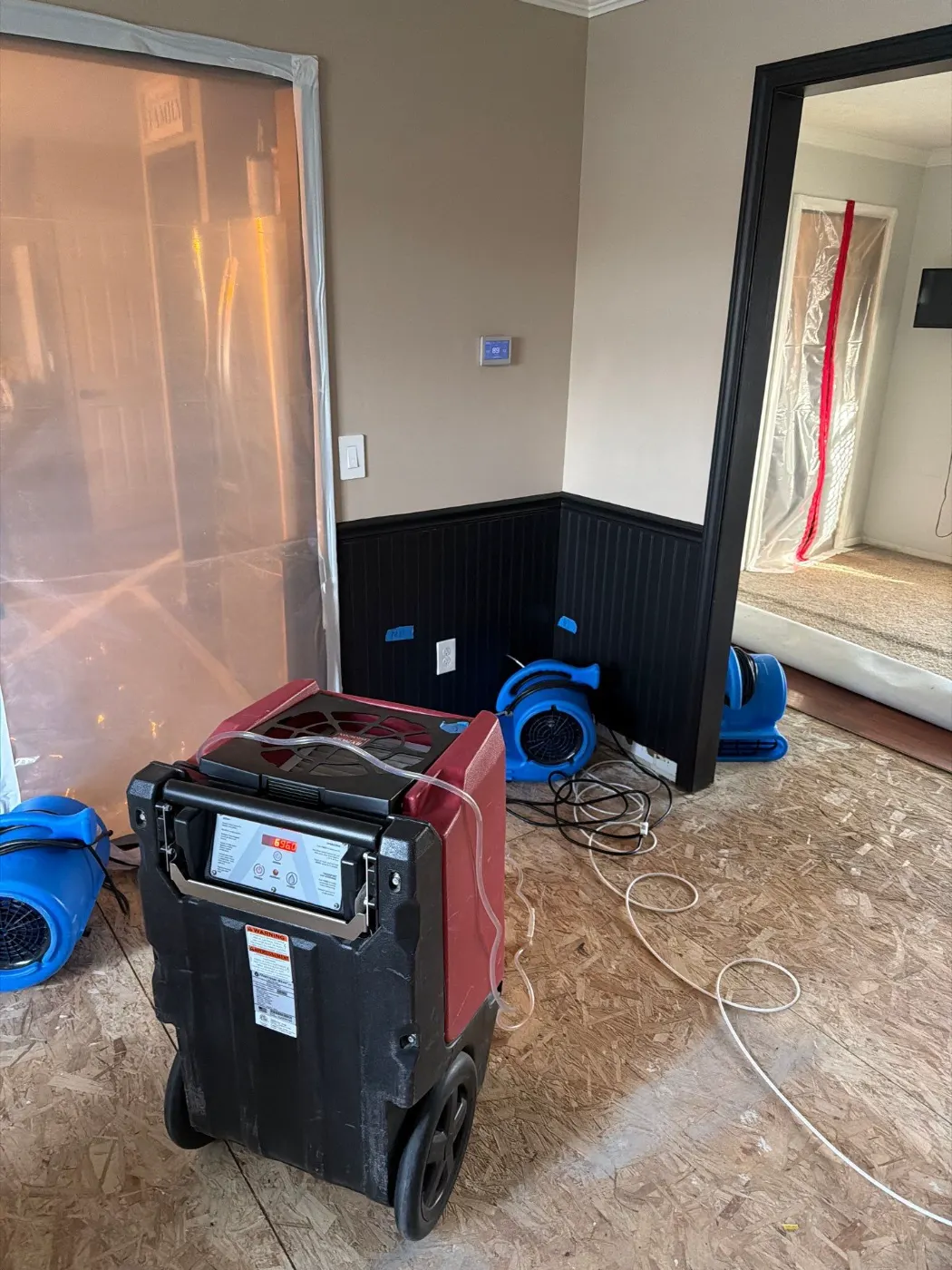
While you wait for Lebanon Water Restoration to arrive, lay down old towels or plastic sheeting to protect flooring, and open windows in the room if humidity allows. Do not run ceiling fans to try to dry the area faster. Air movement on a saturated ceiling can push moisture deeper into joist cavities and accelerate the spread to adjacent rooms. Keep pets and children out of the space entirely, since drywall dust from a collapse contains gypsum particulates and possible insulation fibers.
Can You Just Paint Over the Stain and Move On?
Only if you have verified three things. The source is fixed. The cavity above is bone dry, confirmed with a moisture meter reading below 16 percent in wood and under 1 percent in drywall. And there is no microbial growth on the back side of the panel or on the insulation. Painting a wet ceiling traps moisture, accelerates mold colonization, and almost always leads to the stain bleeding back through within weeks.
If you skip the inspection and the drywall is still damp, you can end up paying twice. We see it constantly. A homeowner rolls on Kilz, the spot returns, and now the joists above are colonized with Stachybotrys. The remediation bill at that point is five times what a proper dry out would have been.
When Is Ceiling Water Damage an Emergency Versus a Next Day Call?
Call immediately if the ceiling is sagging, if water is actively dripping, if the leak is from a pressurized supply line, if sewage is involved, or if the affected area is above electrical panels or bedrooms. Same day response also matters when the water has been sitting more than 24 hours, because the IICRC clock for mold growth starts at 48 to 72 hours. For after hours situations our 24 hour emergency response process explains what happens from the moment you call to the moment equipment is running in your home.
A small dry stain you noticed last month, with no active moisture, can wait until business hours. We would still rather inspect it than guess, because the cost of a free moisture reading is nothing compared to the cost of finding mold six months from now.
How Do You Figure Out Where the Leak Is Actually Coming From?
Ceiling leaks rarely originate directly above the stain. Water follows joists, pipe runs, and the slope of the subfloor before it finally drips down. In Lebanon homes, there are four common culprits worth checking in order. First, the bathroom directly above, including the toilet wax ring, the tub overflow gasket, and the shower pan. Second, supply lines feeding sinks, washing machines, dishwashers, or refrigerator ice makers. Third, the roof itself, especially around plumbing vent boots, chimney flashing, and valleys after wind driven rain. Fourth, HVAC condensate lines, which clog every summer and dump gallons into attic insulation before anyone notices.
If the ceiling is on your top floor, suspect the roof or attic. If it sits below a bathroom or kitchen, suspect plumbing. A burst supply line under pressure puts down water fast and the stain spreads quickly, while a slow drain leak only shows up when the fixture is in use. Our technicians use thermal imaging and moisture meters to trace the path, but you can narrow it down yourself by watching when the stain grows. For deeper diagnostics on pressurized leaks, our breakdown of burst pipe water damage and repair costs walks through what to look for room by room.
Does Homeowners Insurance Cover Ceiling Water Damage?
In most cases, yes, if the cause was sudden and accidental. A burst pipe, an overflowing tub, a failed appliance hose, or storm driven roof damage are typically covered events. What insurance will not pay for is long term seepage, deferred maintenance, or damage that has been visible for weeks. That is why timing your claim and documentation matters.
Take photos before anything is moved. Photograph the ceiling, the room below, any wet contents, and the suspected source. Save the damaged section of pipe or the failed gasket if a plumber replaces it. When you call your carrier, use the phrase "sudden and accidental discharge of water" rather than "leak", because adjusters categorize claims by language. Lebanon Water Restoration works directly with adjusters across Lebanon and can document moisture readings, Category classification under IICRC S500 standards, and dry out logs that satisfy most carriers without back and forth.
Be aware of your policy deductible before filing. If the total repair estimate is close to your deductible amount, sometimes paying out of pocket protects your loss history and keeps premiums stable. We can provide a written estimate first so you can make that call with real numbers in front of you, rather than guessing and regretting it after the claim is opened.
What Does It Cost to Repair Ceiling Water Damage?
Pricing in central Indiana generally falls into three tiers. A small contained stain with no structural saturation, where we cut out a two by two foot section, dry the cavity, and patch the drywall, typically runs $500 to $1,200. A mid size event affecting one full ceiling with insulation replacement, framing dry out, and texture matching usually runs $1,800 to $4,500. A major collapse with multi room damage, mold remediation, and content drying can run $7,000 to $20,000 or more, especially when hardwood floors below have cupped.
The variable that moves the number most is how long the water sat. Drywall saturated under 24 hours can often be dried in place. Past 48 hours, we are looking at demo, antimicrobial treatment, and possible mold protocols. Texture matching also adds cost on older Lebanon homes with knockdown, popcorn, or hand troweled ceilings, since blending a patch into a 30 year old finish takes skill that flat ceilings do not require. A full overview of pricing variables is laid out in our water damage restoration cost breakdown if you want to estimate before the adjuster arrives.
Get the Ceiling Fixed Right the First Time
A ceiling leak in your Lebanon home is one of those problems that gets exponentially more expensive the longer it sits. Catch it in the first day and you might be looking at a patch and a coat of paint. Wait a week and you are removing insulation, treating mold, and replacing fixtures. Lebanon Water Restoration responds 24 7 across Central Indiana, documents every step for your insurance carrier, and tells you straight when a repair is simple enough to handle yourself. Call when you see the stain, not after the drywall hits the floor.
Frequently Asked Questions
How quickly should I act on a ceiling leak in Lebanon?
Within hours, not days. Mold can begin growing in 24 to 48 hours, and saturated drywall can collapse without warning. Lebanon Water Restoration offers 24/7 emergency response across Lebanon and surrounding Central Indiana communities.
Will my homeowners insurance cover ceiling water damage?
Sudden and accidental damage, such as a burst pipe or storm related roof leak, is typically covered. Gradual leaks from long term neglect usually are not. Lebanon Water Restoration can document the damage and work directly with your adjuster to clarify coverage.
Can you dry the ceiling without cutting it open?
Sometimes, if the damage is caught early and the cavity above is accessible. We use injection drying systems and dehumidifiers when possible. Sagging or heavily saturated drywall usually has to be removed for proper drying and mold prevention.
How much does ceiling water damage repair cost in Lebanon?
Most jobs fall between 500 and 3,000 dollars depending on the size of the affected area, whether framing is involved, and if mold treatment is required. Severe collapses or multi room damage can exceed that range.
What if I just paint over the stain?
If the leak is still active, the stain will return and the hidden damage will worsen. Always confirm the source is stopped and the area is fully dry before painting, and use a stain blocking primer to prevent bleed through.
Have a restoration question?
Our IICRC certified Lebanon crew is ready to help. Free assessments, estimate based on what we can sees, no pressure.